News Digest 28.08.2026 — 04.09.2026
Regulators
The experiment on labeling glucometers and reagents has been extended until 2027
The Russian Government has extended the deadline for the experiment on labeling certain types of medical devices. Resolution No. 1113 of August 31, 2026, was published on the legal information portal.
The changes affect glucometers and reagents. Previously, according to Resolution No. 620 of May 17, 2024, the experiment on labeling medical devices was divided into three stages:
- Stage I — started on March 1, 2025;
- Stage II (glucometers) — was scheduled from March 2, 2026, to August 31, 2026;
- Stage III (reagents) — from March 1, 2026, to February 28, 2027.
The new regulation extends Stage II (glucometers) until February 28, 2027, ending simultaneously with Stage III (reagents). For all other product groups, the labeling experiment has also been extended until February 28, 2027.
Market news
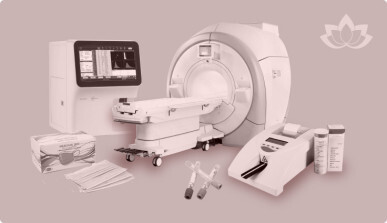
The global MRI equipment market will grow 1.7-fold by 2034
The global magnetic resonance imaging (MRI) equipment market will reach $14.03 billion by 2034, up from $8.15 billion in 2025. The compound annual growth rate (CAGR) will be 6.4%, according to a Fortune Business Insights report.
The main drivers of market expansion are the increasing prevalence of chronic diseases (including cancer, Alzheimer's disease, and Parkinson's disease), the rise in musculoskeletal injuries, and the modernization of medical infrastructure in developing countries.
One significant market trend is the transition from standard 1.5T magnetic field devices to high-field and ultra-high-field solutions at 3T and 7T. These systems provide increased detail of anatomical and functional structures, although previously most high-performance MRI equipment was used exclusively for research purposes.
An additional factor in the modernization of the equipment fleet has been the integration of artificial intelligence: reconstruction algorithms improve scanning speed and image quality, accelerate data collection, and reduce operator dependence in the face of medical staff shortages, analysts emphasize.
Musculoskeletal imaging is the leading MRI application area, with its market share expected to reach 32.2% by 2026. Closed-loop scanners remain the leading design, accounting for 82.9% of global sales. In terms of power, devices with a magnetic field strength of 1.5 T dominate.
The Asia-Pacific region is the geographic leader in revenue, with the MRI market expected to reach $3.76 billion in 2025, outpacing the European and North American markets.
GE HealthCare, Siemens Healthineers AG, and Koninklijke Philips NV remain global market leaders. These companies maintain their dominant positions by expanding their high-tech device lines, developing intelligent scanning systems, and developing partnerships with research institutes.
A drone manufacturer has entered the Russian medical equipment market
Zala, a Russian manufacturer of unmanned aerial vehicles (UAVs), has entered the medical equipment market with a next-generation artificial lung ventilation (ALV). The device is designed for long-term respiratory support for the wounded and injured in the field, in air ambulances, and in intensive care units, the company's press service reported.
The device is designed to operate in extreme conditions: dust, smoke, temperature fluctuations, and humidity. According to the manufacturer, it is unique in Russia and the CIS.
Deployment of the ventilator takes no more than a minute—30 to 60 seconds. Its key technical features are autonomy and energy efficiency: a brushless turbine allows the device to be used without being connected to an oxygen tank, and a removable battery provides up to 12 hours of battery life.
The developers note that the ventilator's built-in artificial intelligence (AI) continuously analyzes the patient's condition and advises the physician on the optimal respiratory support strategy. Switching between ventilation modes is accomplished via a direct push-button control interface.
Other
Financial problems do not exempt a medical institution from entering into a contract for medical device maintenance
"The Central District Hospital received a prosecutor's order to eliminate violations of licensing requirements for medical activities. The violation cited was the lack of a contract for the maintenance of medical devices. The Central District Hospital is in dire financial straits and therefore enters into contracts for the repair of specific medical devices as needed.
According to the Central District Hospital, the prosecutor's demands are unfounded: the licensing requirements apply to a license applicant, which the Central District Hospital is not. Are the prosecutor's demands legitimate? Are there alternative ways to fulfill licensing requirements?"
Alexander Vasilevitsky, expert at the Garant legal consulting service, answers:
"In accordance with paragraph 46, part 1, article 12 of Federal Law No. 99-FZ of May 4, 2011, medical activities are considered licensed activities." The Regulation on Licensing Medical Activities (RF Government Resolution No. 852 of June 1, 2021) states that licensees must comply with the licensing requirements imposed on license applicants, as well as the requirements specified in paragraph 6.
One of the licensing requirements imposed by paragraph 5 of the Regulation on license applicants is the presence of employees performing maintenance of medical devices (equipment, apparatus, devices, instruments) who have concluded employment contracts with the license applicant and who have the necessary professional education and/or qualifications, or the existence of an agreement with an organization licensed to carry out such activities.
The regulation requires that a medical organization must employ a medical device maintenance specialist (MDMS) with the necessary education and/or qualifications, or enter into an agreement(s) with an organization licensed in accordance with Russian Government Resolution No. 2129 of November 30, 2021, "On Approval of the Regulation on Licensing of Medical Device Maintenance Activities (except for cases where maintenance is carried out to meet the in-house needs of a legal entity or individual entrepreneur, as well as for maintenance of medical devices with a low degree of potential risk of their use)."
A medical organization's lack of an in-house specialist or an agreement(s) for MDMS with another legal entity indicates its non-compliance with the licensing requirements for medical activities and is grounds for administrative liability under Parts 3 and 4 of Article 14.1 or Parts 2 and 3 of Article 19.20 of the Code of Administrative Offenses of the Russian Federation.
The argument that medical device maintenance contracts are concluded periodically, as needed for repairs to a specific medical device, cannot be considered convincing. Thus, according to paragraph 4.14 of GOST R 58451-2019, repairs are only one component of the medical device maintenance system, which also includes: periodic medical device maintenance, unscheduled medical device maintenance, technical diagnostics, equipment and technical support, installation/dismantling, or adjustment.
An alternative to contracting for medical device maintenance through a third-party organization is to create an in-house medical device maintenance service (hiring a specialist(s) to perform medical device maintenance). Requirements for a medical organization's in-house service (unit, specialists) performing medical device maintenance are established by GOST R 58451-2019; in particular, see paragraphs 5.2–5.5, as well as the notes to paragraph 5.5.
Immanuel Kant Baltic Federal University (IKBFU) has developed a device for the contactless treatment of autoimmune skin diseases
Scientists from the Immanuel Kant Baltic Federal University (IKBFU) have developed a device for the comprehensive treatment and relapse prevention of immune-related dermatological diseases. The system allows for contactless detection of affected skin areas, takes into account their contours, and automatically doses ultraviolet (UV) radiation for each zone, eliminating exposure to healthy skin. According to the authors, the project's implementation is in line with the priorities of the Russian Federation's Scientific and Technological Development Strategy.
The device is designed for phototherapy for autoimmune and other immune-related skin diseases. IKBFU is both the client and the contractor.
The device is based on a combination of machine vision technology and a liquid crystal display (LCD) that is transparent in the UV range. The system should automatically identify skin areas requiring irradiation and select the appropriate UV dose for each area.
According to the project's authors, automated dose control and spatial distribution of UV radiation can be used for the comprehensive treatment and prevention of these types of diseases.
Phytotherapy has been included in clinical guidelines for the treatment of acute respiratory viral infections in children
The Russian Ministry of Health has approved a new version of clinical guidelines (CG) for the treatment of acute respiratory viral infections in children. The document replaces the previous version of the regulations from 2022 and allows for the use of phytotherapy. The developers were the Union of Pediatricians of Russia, the Interregional Association for Clinical Microbiology and Antimicrobial Chemotherapy, and the Russian Society of Emergency Medical Care.
According to the updated standard, in the absence of contraindications, children with signs of acute tracheitis and a productive cough with difficult-to-expel sputum are recommended to selectively administer ivy leaf extract or a combination of primrose root extract and thyme herb extract. Other herbal remedies may also be prescribed.
However, the Kyrgyz Republic noted that the evidence supporting the effectiveness of herbal therapy in children with acute respiratory viral infections and acute tracheitis is limited, particularly due to the limited data on a standardized approach to substance production.
As previously, the Ministry of Health does not recommend prescribing ample fluid intake, as its benefit is questionable, and increased secretion of antidiuretic hormone during illness, on the contrary, contributes to fluid retention. The use of homeopathic remedies is also not recommended.
A separate section is devoted to non-pharmacological treatments. The authors of the regulations note the interest in the results of modern research on the use of "home" treatment methods. Thus, it has been shown that the use of honey, lemon, and herbal teas to treat ARVI symptoms can be effective and eliminate the need for pharmaceuticals. These treatments can be considered as an alternative if the child does not have allergies.
The medical examination program will be amended
The Russian Ministry of Health has prepared a draft new procedure for conducting preventive medical examinations and screenings for adults. The document is published on regulation.gov.ru. One of the significant changes is expanded guarantees for participants in a special military operation (SVO).
Visiting a clinical psychologist has been extended for combat veterans. If a consultation is not possible on the day of the examination, it is proposed to be scheduled within three working days for residents of urban areas and within 10 working days for those living in rural areas or remote settlements.
The medical examination program will also include a lipid profile assessment—a test that assesses the state of fat metabolism in the body. For those aged 18 to 39, the test is performed once every six years; for those aged 40 and older, it is performed once every three years. Additionally, each patient will have their lipoprotein(a) level, a genetically determined risk factor for atherosclerosis, measured once in their lifetime. Doctors consider these indicators when calculating cardiovascular risk and determining heart attack and stroke prevention strategies.
A new type of instrumental screening is also being introduced for the second stage of medical examinations: an ultrasound examination of the abdominal aorta to detect aneurysms. The test will be performed on men over 65 who smoke or have smoked, and on people aged 65–75 with close relatives who have had an abdominal aortic aneurysm.
The responsibilities of paramedics have been expanded to include screening for hepatitis C antibodies for people over 25 once every 10 years (determining total antibodies of classes M and G to the hepatitis C virus). These responsibilities have also been expanded for general practitioners, who are now also referring patients of a certain group to an adult health center or medical prevention office (department).
Source: https://medvestnik.ru/content/news/v-programmu-dispanserizacii-vnesut-dopolneniya.html
New registered medical devices
We publish a list of new medical devices registered from 08.28.2026 to 09.04.2026
Link to the list: [see table in the attachment]
News